
Commercial Roofing: Stop Patching the Same Leak
A business can't shut down every time it rains. MTL repairs and replaces commercial roofs across Central Texas, including restaurants, breweries and retail buildings, and explains the options in plain language so owners can make the right call for the building and the budget.
What a worn-out ModBit roof looks like
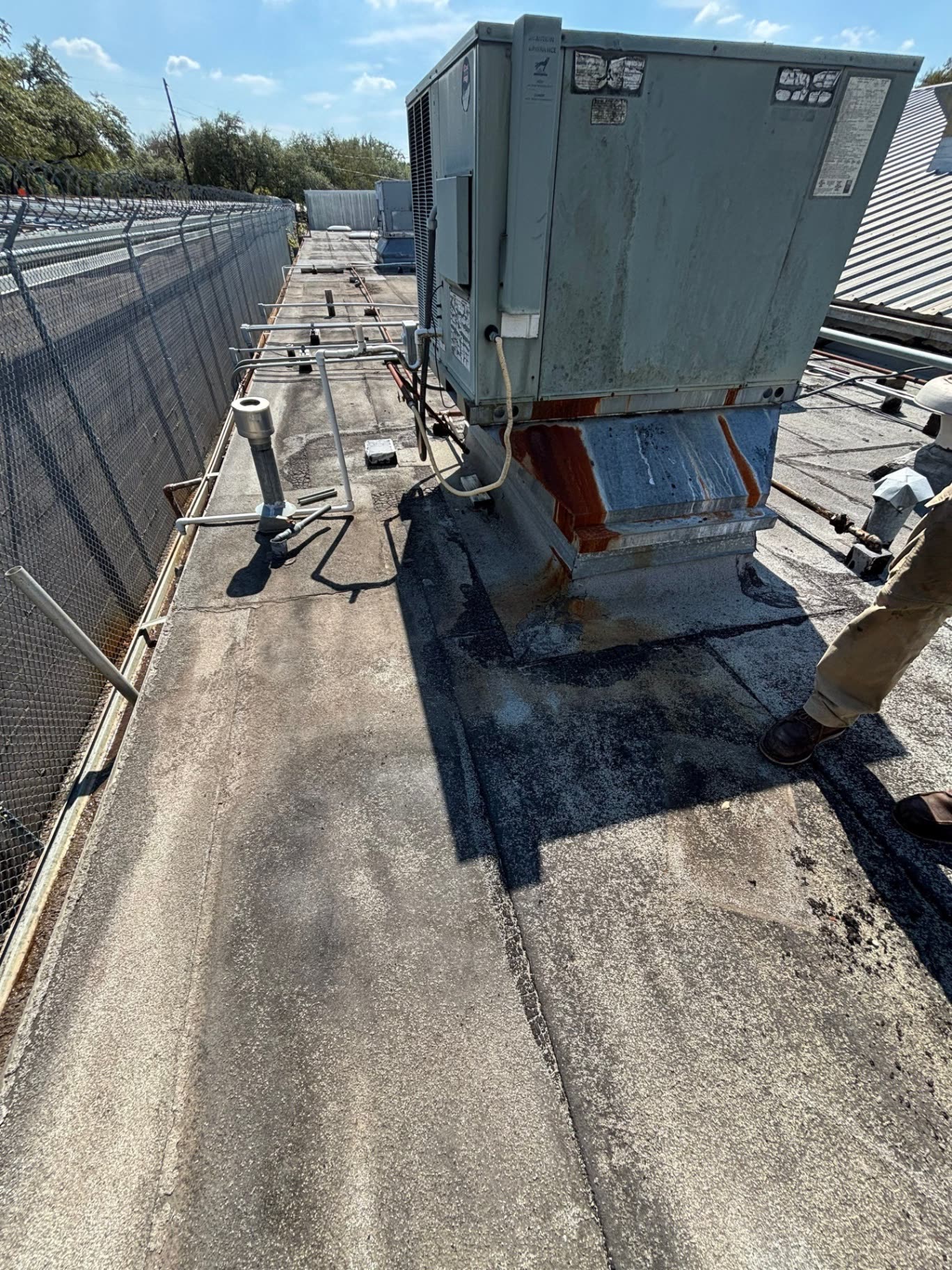
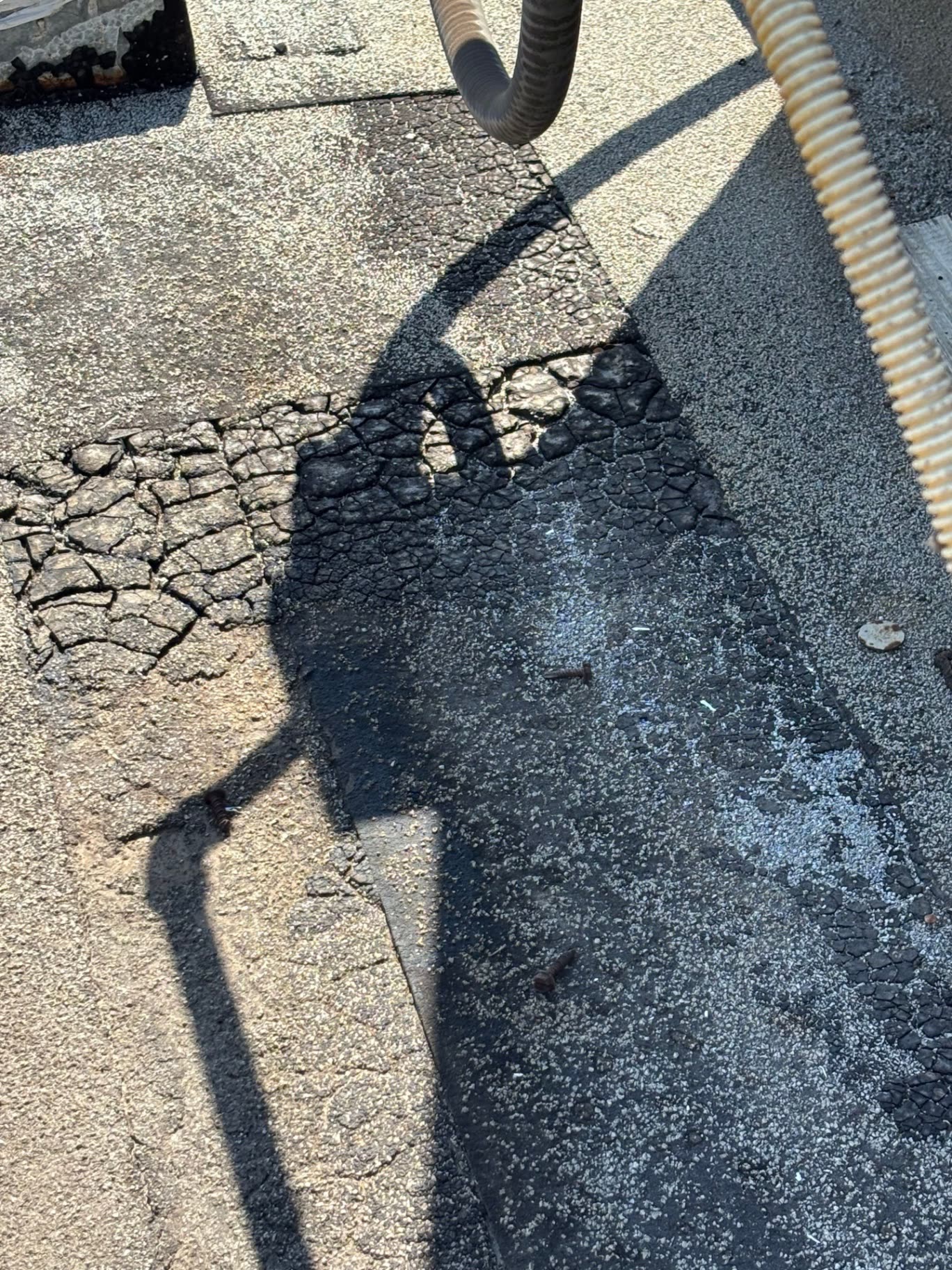
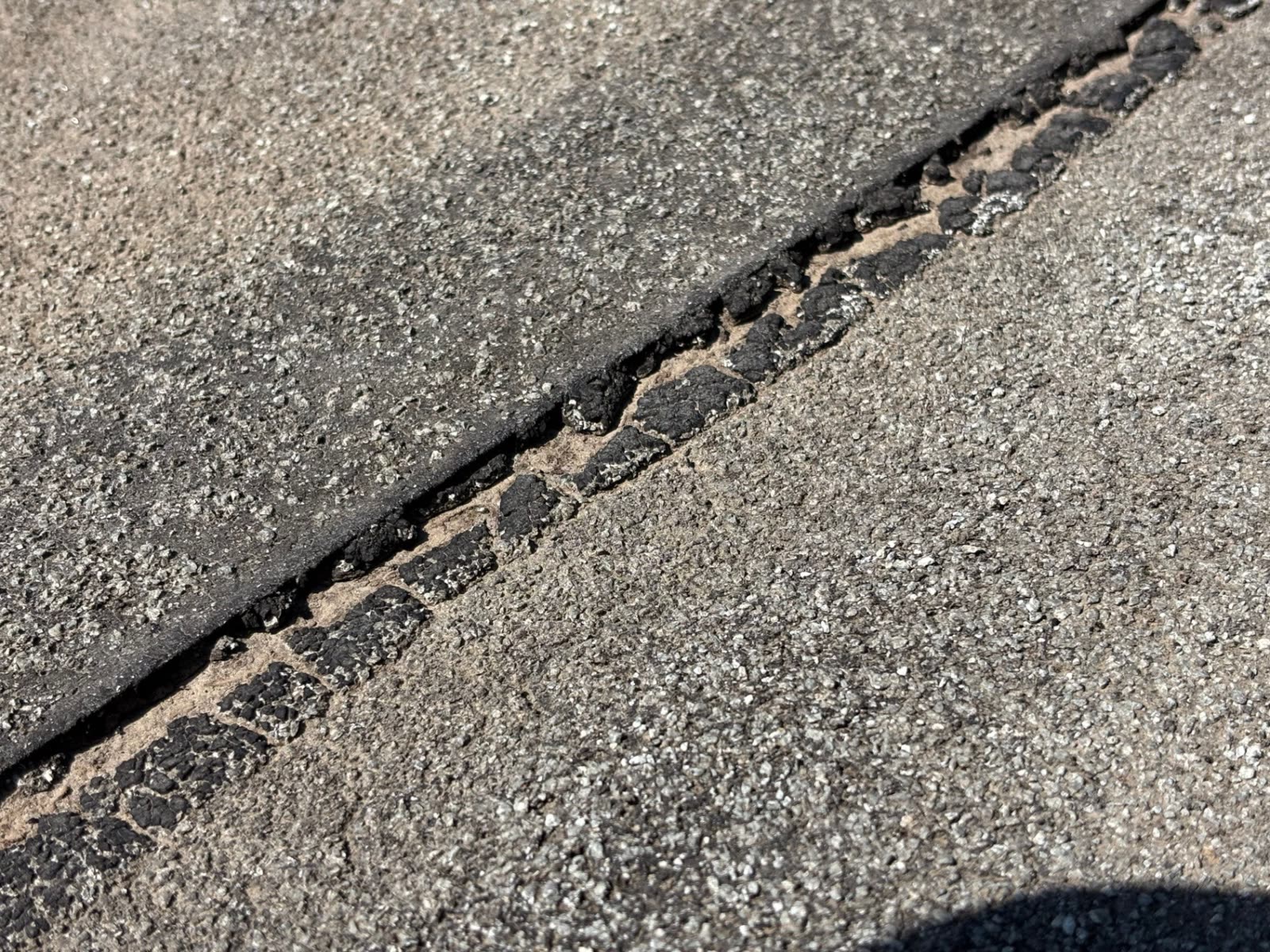
This is a leaking modified bitumen (ModBit) roof on a brewery in Austin. Years of patches tell the story. Black roof cement has been smeared around the base of the rooftop AC unit, and rust is running down its curb. Old patches have dried and cracked like alligator skin. At the seams, the tar that once sealed the overlap between sheets has cracked into chunks and pulled apart, leaving a path for water.
Patching a roof like this buys a little time, but each patch dries out and cracks in the Texas sun. Once the seams and flashings are failing across the whole roof, more roof cement isn't a repair. It's time to talk about a new roof system.
A PVC overlay on a restaurant's metal roof
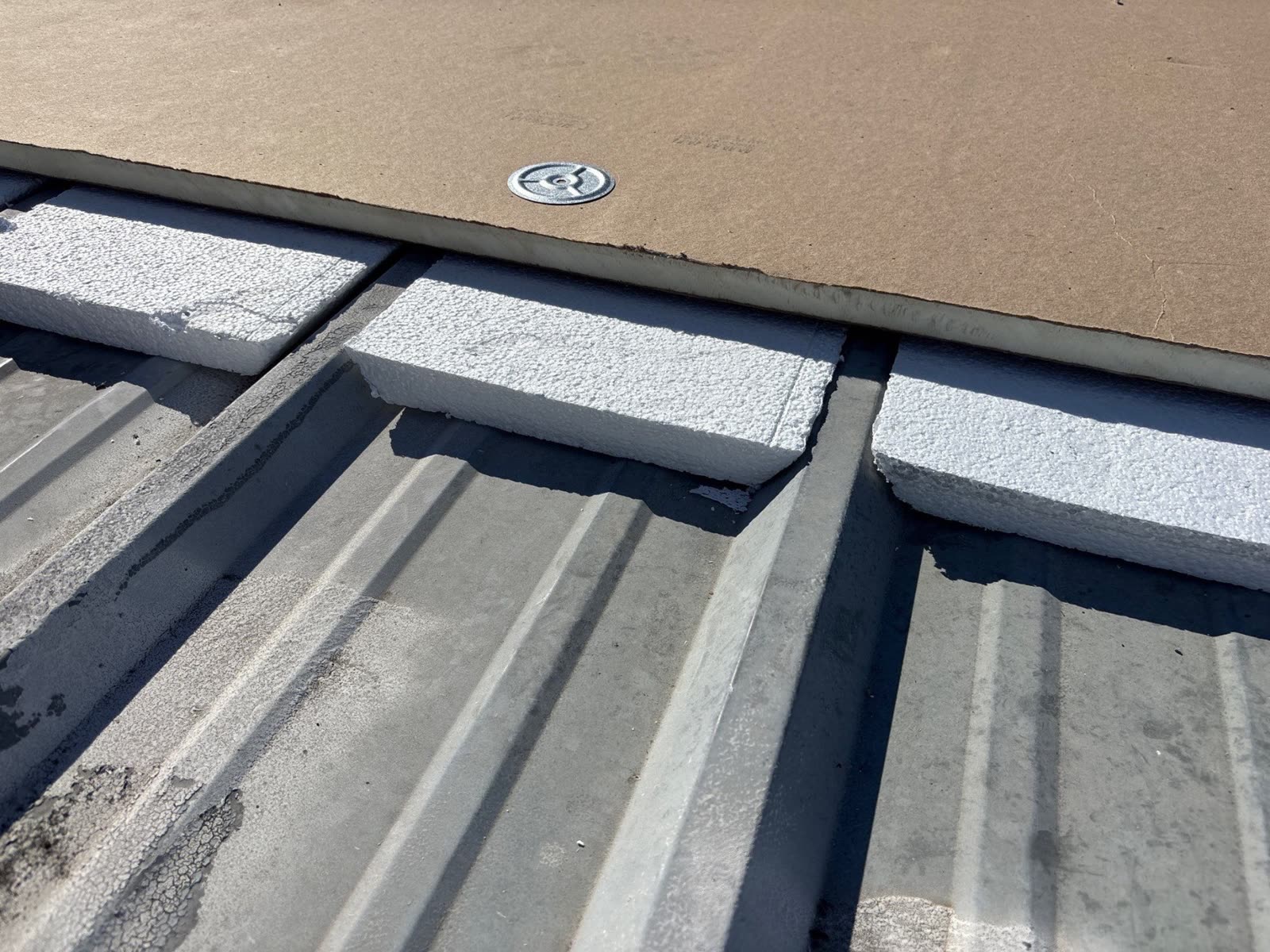
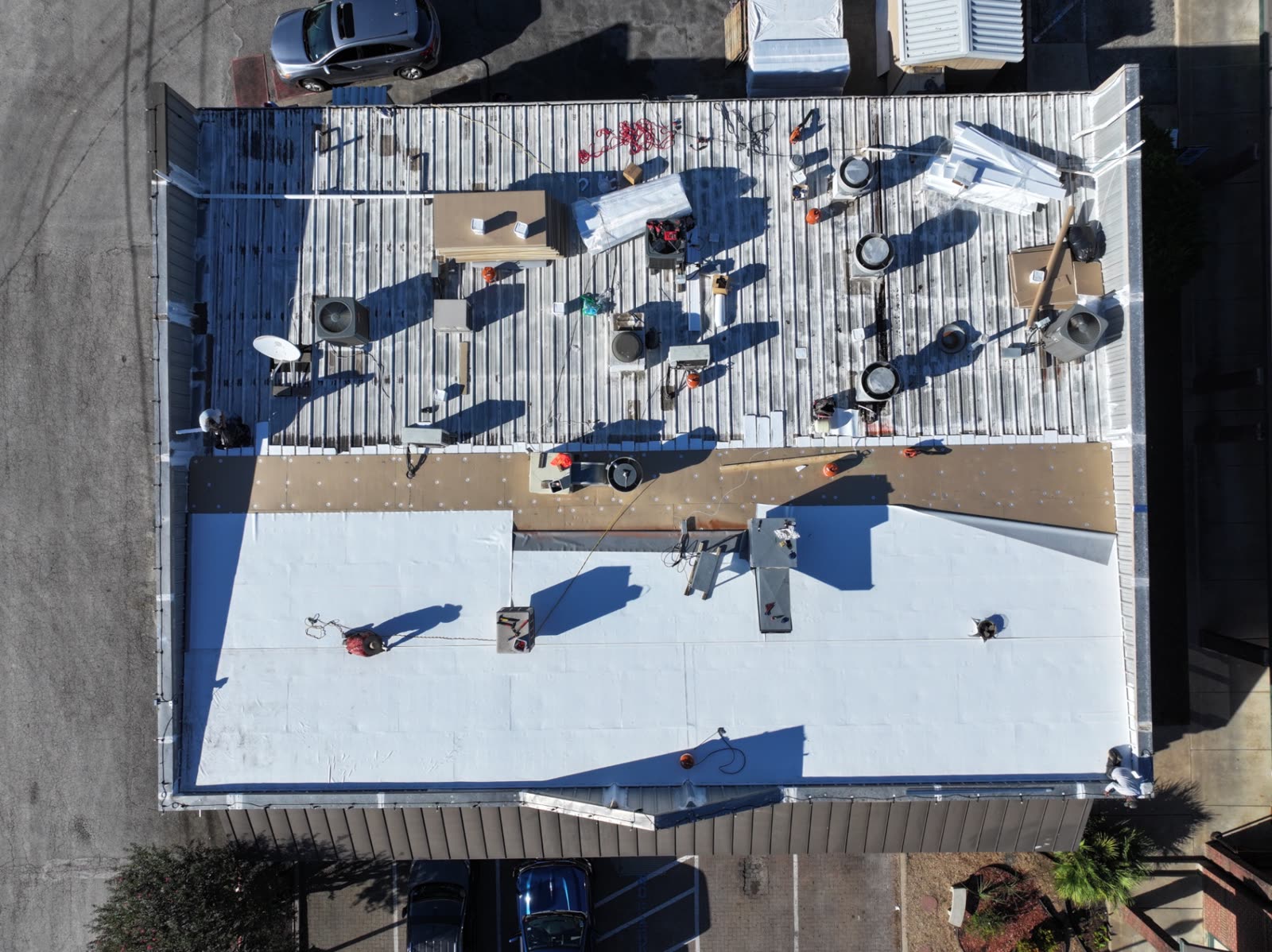
This restaurant had a low-slope metal roof. Instead of tearing it off, MTL built a new roof over it:
- Foam strips filled the low channels of the metal panels to create a flat, solid base.
- Insulation board went on top, fastened through to the structure with screws and metal plates.
- A white PVC membrane covered everything, with its seams heat-welded together.
The result is a smooth, bright white roof that reflects the sun, with new insulation underneath, and no tear-off of the old metal.
Commercial roof systems MTL installs
TPO
A white single-ply membrane with heat-welded seams. It reflects sunlight, which helps keep the building cooler, and it's one of the most common choices for flat and low-slope roofs.
PVC
Also a white single-ply membrane with heat-welded seams. PVC holds up well to grease and oils, which makes it a strong choice for restaurants and other buildings with kitchen exhaust on the roof.
Modified bitumen (ModBit)
Asphalt-based sheets installed in layers, usually with a granulated top sheet. It's tough and familiar, but its seams and flashings need to be watched as the roof ages.
Metal
Long-lasting metal panels for low- and steep-slope buildings. An existing metal roof can also serve as the base for an overlay, like the restaurant above.
Stone-coated steel
Steel panels coated with stone granules, shaped to look like tile, shake or shingles. A good fit for steep-slope commercial buildings that want a traditional look with the strength of steel.
What MTL checks before recommending a fix
- Where the water is actually getting in: seams, flashings around rooftop units, drains or edges
- Whether the existing roof and deck are sound and dry enough to cover, or need to come off
- How the building is used: kitchen exhaust, foot traffic to rooftop equipment, and the hours the business can't be disrupted
- Insulation and how much sun the roof takes, since a white roof can lower cooling loads
Commercial roofing questions
Can a new roof go over an existing metal roof?
Often, yes. MTL can fill the metal panel channels, add insulation board and cover it with a PVC or TPO membrane, without tearing off the old metal. The existing roof has to be sound enough to support it.
What is the difference between TPO and PVC?
Both are white single-ply membranes with heat-welded seams. PVC holds up better to grease and oils, so it's often the better choice for restaurants.
Why does my flat roof keep leaking after it's patched?
Roof cement patches dry out and crack in the Texas sun, and failing seams and flashings keep opening new paths for water. When that's happening across the whole roof, a new roof system usually costs less than patching forever.
What kinds of commercial buildings does MTL work on?
Restaurants, breweries, retail and office buildings, and other low- and steep-slope commercial roofs across Central Texas.
Tired of patching the same commercial roof?
Serving Austin, Lakeway, Steiner Ranch, Bee Cave, Spanish Oaks, West Lake Hills, Barton Creek, Dripping Springs, Spicewood, Marble Falls, Cedar Park, Round Rock, Georgetown.