
01
Tile roofs
Broken or displaced tiles are only the visible symptom. I trace the water path through valleys, transitions, flashing and the underlayment below the tile before recommending a repair.
A roof leak is rarely as simple as the stain on the ceiling. I inspect the roof, attic and interior evidence to find where water is getting in — then explain what I found before repair work begins.
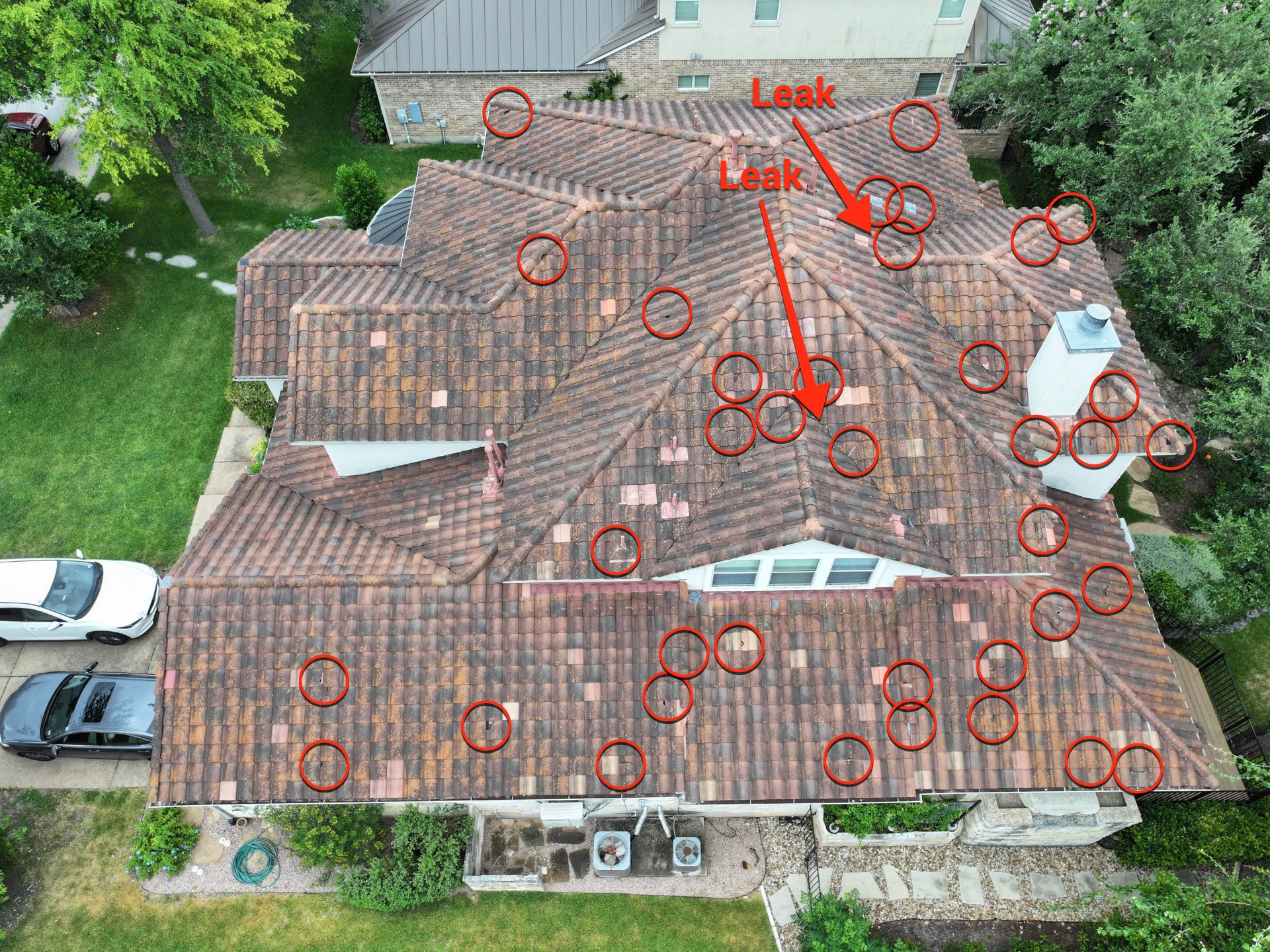
A focused repair may be the right answer when the roofing system still has useful life and the failure can be isolated. If the damage is too widespread for a dependable repair, I will tell you that too.
My job is to give you clear evidence and a professional recommendation — repair, replacement, or no action — so you can decide what makes sense for your home.
Broken or displaced tiles are only the visible symptom. I trace the water path through valleys, transitions, flashing and the underlayment below the tile before recommending a repair.
Missing shingles, exposed decking, failed flashing and installation shortcuts can all let water in. The repair has to restore the complete water-shedding system, not just cover the opening.
Low-slope roof leaks often develop around seams, penetrations, drains, edges and old patches. I inspect the field membrane and every transition where water can enter.
These are real conditions from tile, asphalt shingle and modified bitumen roofs, along with the attic and interior damage a leak can leave behind.
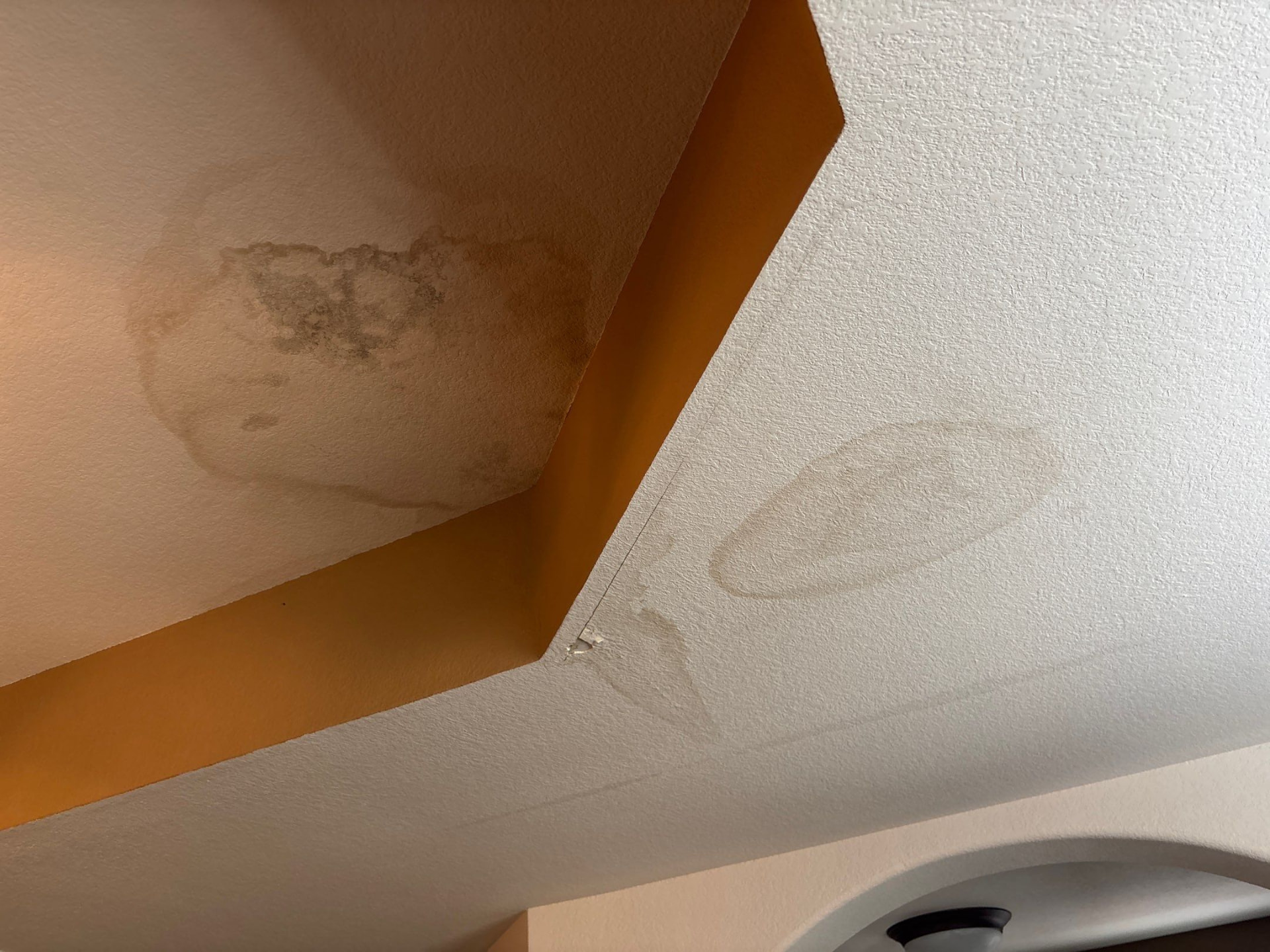
Ceiling stains show where water became visible — not necessarily where it entered the roof.
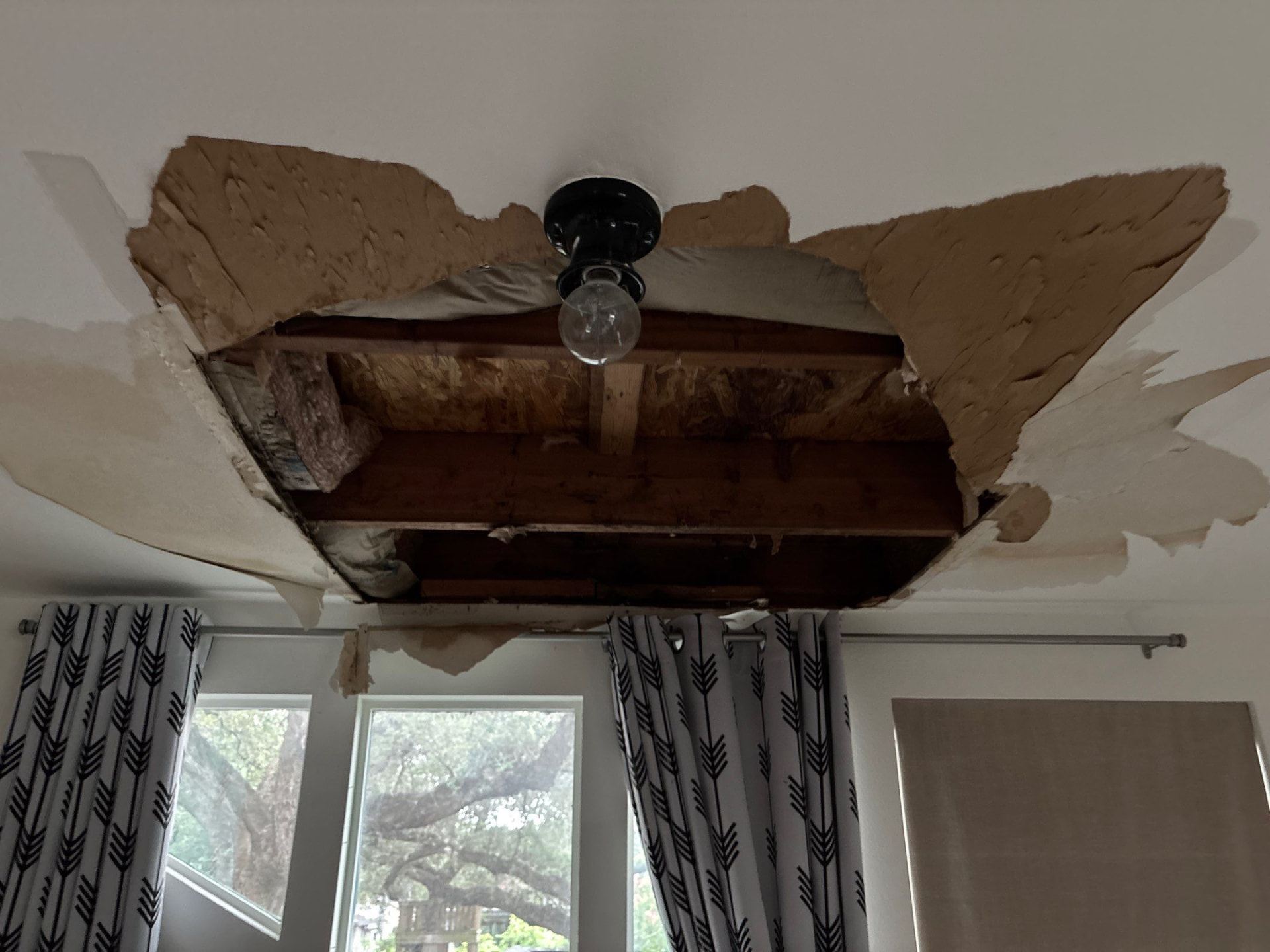
Opening a damaged ceiling can reveal wet materials and the route water followed through the structure.
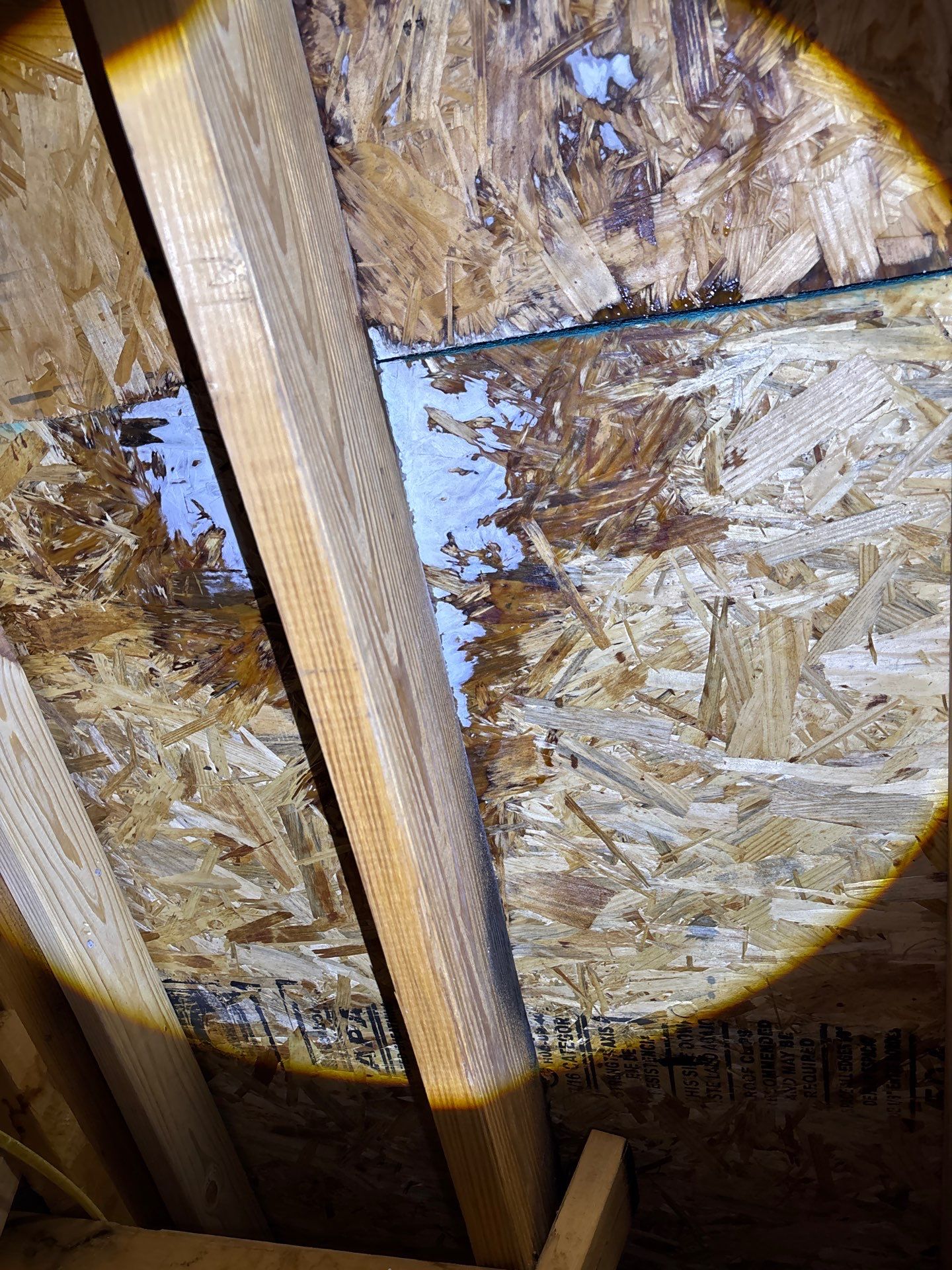
Moisture patterns below the roof deck help connect interior damage to the source above.
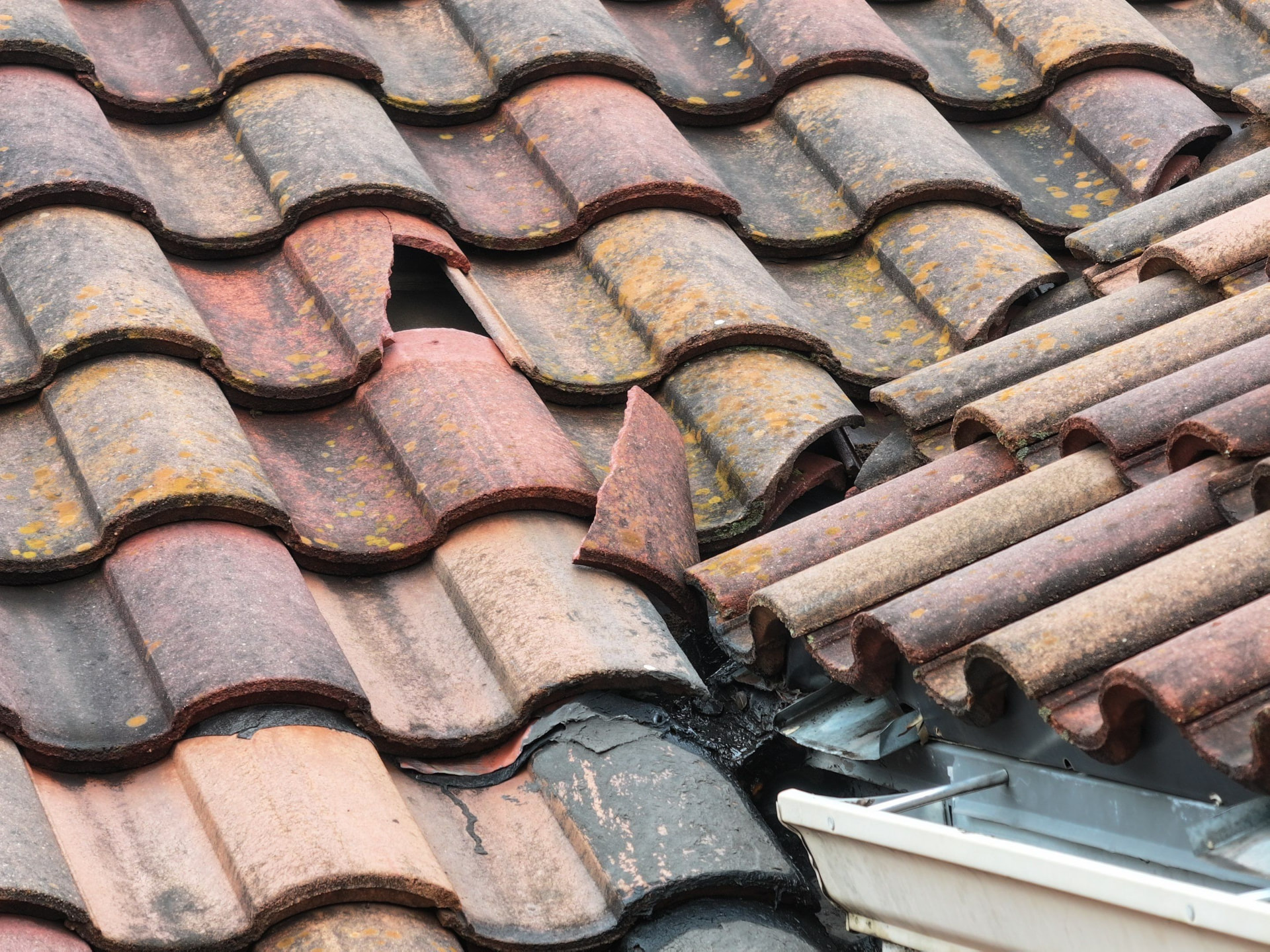
Broken field and valley tiles can expose the roof's underlying water-control layers.
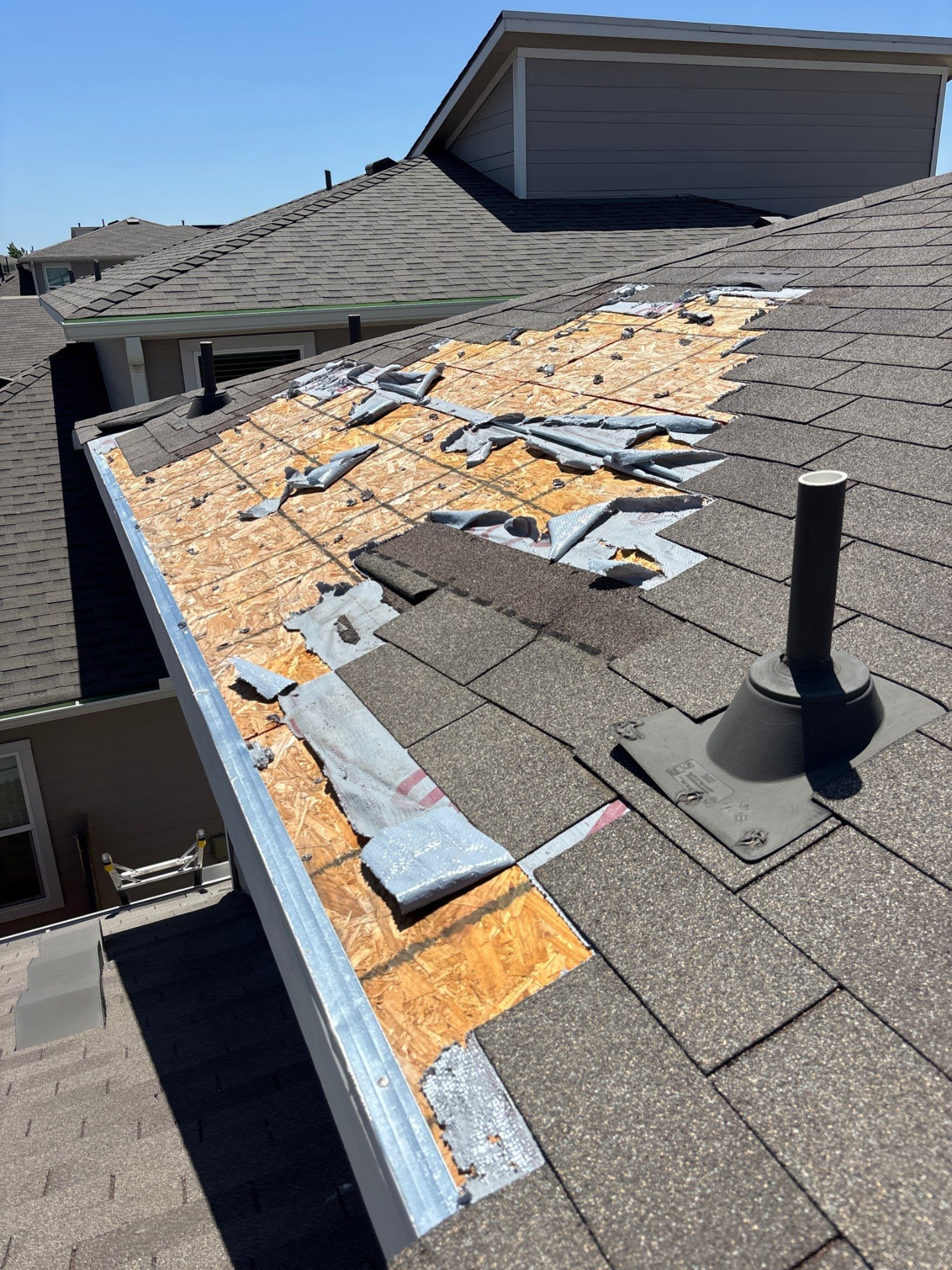
Exposed decking needs more than a surface patch; the surrounding assembly must be restored correctly.
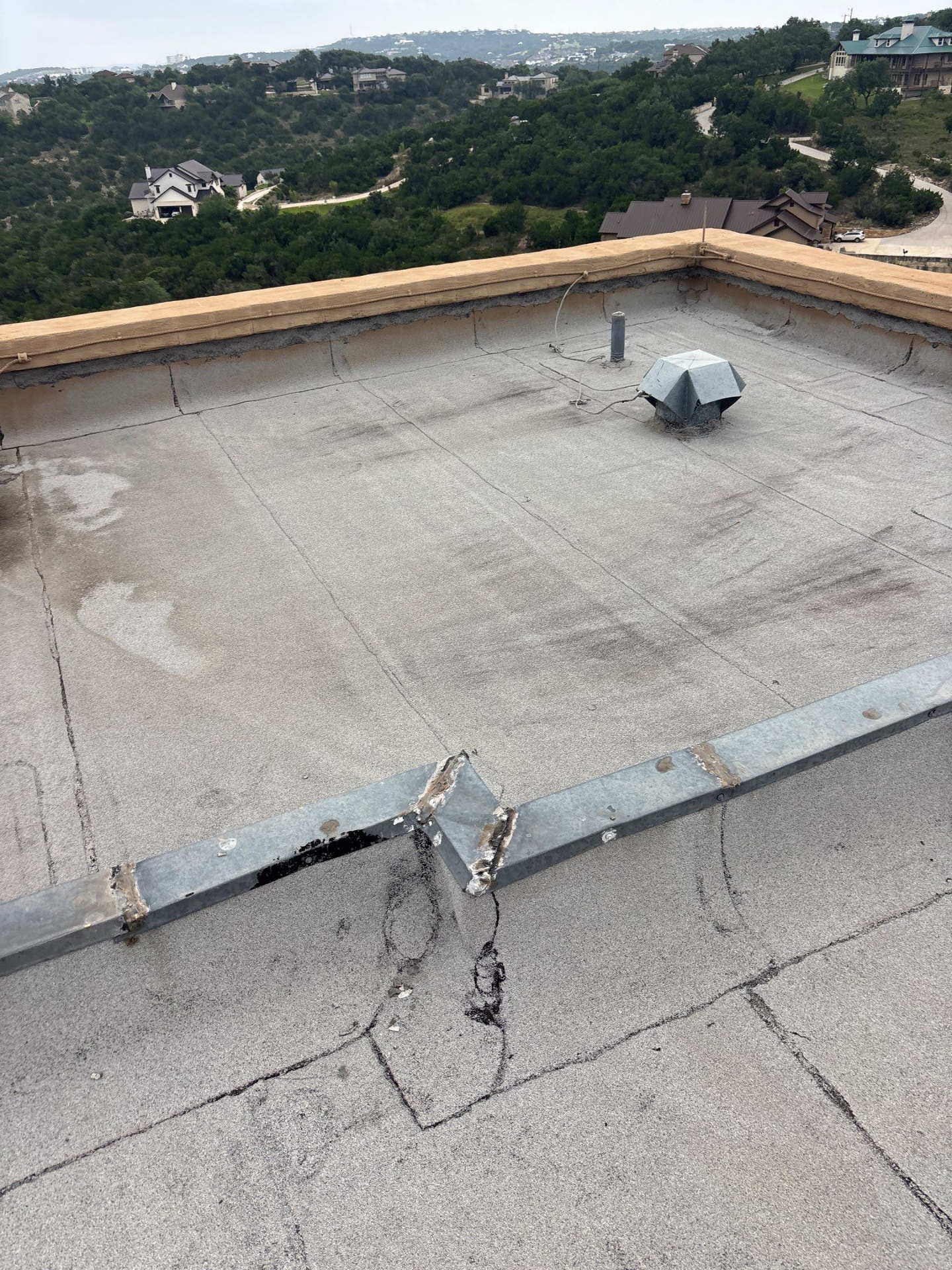
Seams, penetrations, perimeter metal and old patches are critical checkpoints on modified bitumen roofs.
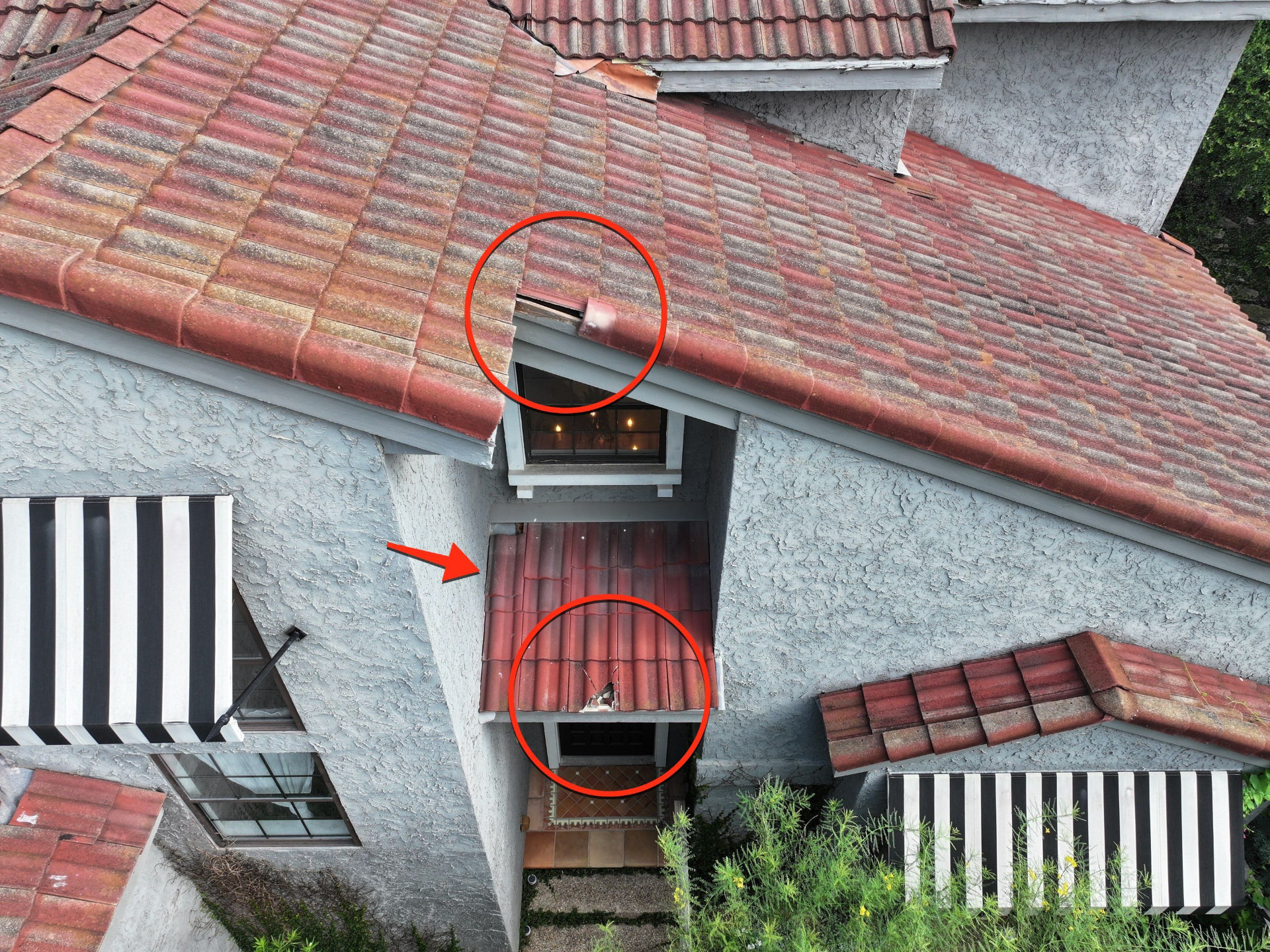
Marked inspection photos make widespread damage and likely water-entry points easier to understand.
An overall view helps reveal how separate defects may connect across a complex tile roof.
Water can travel along decking, framing and insulation before it reaches the ceiling. I work backward from the interior evidence to the most likely entry points.
You see photos of the roof, attic and interior conditions so you can understand the problem and make an informed decision.
The repair is matched to the roofing system and the actual failure — including damaged materials beneath the surface when they need attention.
When requested, I can also repair damaged drywall, match texture and paint after the source of the leak is corrected and the area is dry.
Tell me what you are seeing and when it started. Photos of the ceiling, attic or roof help me understand the urgency and the right next step.